

Greenwich Village Luxury Real Estate & Neighborhood Guide
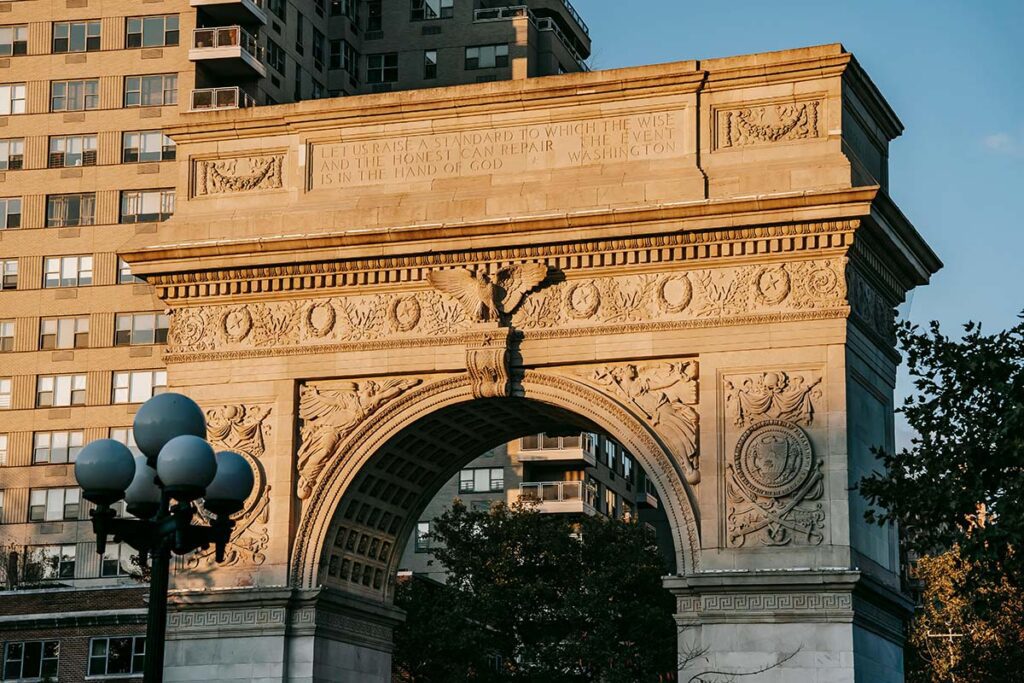
Greenwich Village is a historic Manhattan neighborhood centered around Washington Square Park and NYU, known for bohemian heritage, jazz clubs, and literary history. Real estate includes pre-war co-ops, walk-ups, and brownstones, with prices typically ranging from $800K to $8M+.
The Neighborhood
Greenwich Village—locals just call it “the Village”—has a character unlike anywhere else in Manhattan. The streets don’t follow the grid. They curve and twist in ways that feel more European village than New York City, a reminder of when this area was farmland outside the city limits.
This is the neighborhood that defined American counterculture. Bob Dylan, Allen Ginsberg, the Stonewall uprising, Washington Square Park protests—the Village has been at the center of movements that shaped the country. That creative, independent spirit still lives here today, even as the neighborhood has become one of Manhattan’s most expensive.
NYU’s presence adds a layer of energy—students fill the cafes, the parks, the late-night pizza spots. But the residential blocks remain surprisingly quiet, tree-lined, and intimate. Many brownstones and townhouses have been in the same families for generations.
I’ve helped buyers navigate this neighborhood’s quirks—the co-op boards that care deeply about preserving building character, the blocks where every property has a story, the balance between being close to Washington Square’s energy while still having a peaceful home.
Property Types
Pre-War Co-ops The dominant housing type. These buildings have the details buyers love—high ceilings, crown moldings, wood-burning fireplaces, herringbone floors—but come with board approval processes that require preparation. Expect strict financial requirements and subletting restrictions.
Walk-Ups Charming brownstone and townhouse conversions, often with original details and outdoor space. No doorman, no elevator—but that’s part of the appeal for many buyers seeking authenticity.
Brownstones & Townhouses Trophy properties that rarely come to market. When they do, they move quickly and often privately. Prices typically start at $5M and can exceed $15M for prime blocks near Washington Square Park.
Small Boutique Condos Limited inventory, but highly sought after for the flexibility they offer compared to co-ops. These buildings typically have fewer than 20 units and maintain the neighborhood’s intimate scale.
Market Snapshot
Greenwich Village commands premium pricing, reflecting both the historic character and the NYU-adjacent location.
- Co-ops: Entry points around $800K – $1.2M, with most quality inventory $1.5M – $4M
- Condos: Typically $2M – $6M+, with limited inventory
- Townhouses: Rarely available under $5M, prime blocks $8M – $15M+
- Price per square foot: $1,400 – $2,000+ depending on building, condition, and proximity to Washington Square Park
Recent market data (Fall 2025): Median sale price approximately $1.4M, with condo prices averaging $4M+ and co-op prices around $1.1M. The market has shown resilience with steady demand from both buyers seeking primary residences and parents purchasing for NYU students.
Let’s discuss what you’re looking for →
Location & Commute
One of Greenwich Village’s biggest advantages is accessibility from nearly anywhere:
- Multiple subway lines — A, C, E, B, D, F, M trains, plus N and R at 8th Street
- Walking distance — To Union Square, Chelsea, West Village, Soho, Tribeca
- NYU campus — Integrated throughout the neighborhood
- Major bus routes — M5, M7, M11, M14, M20
The neighborhood is extremely walkable, with most residents covering daily needs on foot.
Co-op vs. Condo: A Key Decision
Greenwich Village has a higher concentration of co-ops than condos, which shapes the buying experience significantly.
Co-ops offer more space for your budget and access to classic pre-war architecture. But the board approval process is rigorous—financials, references, interviews, strict subletting policies—and timelines are longer.
Condos provide flexibility and faster transactions, but inventory is extremely limited and competition is fierce. Expect to move quickly and pay a premium.
The right choice depends on your timeline, financing situation, and how much flexibility you need. This is one of the first conversations I have with buyers exploring Greenwich Village.
Frequently Asked Questions
-
What's the real estate market like in Greenwich Village?
Competitive with limited inventory. Properties often receive multiple offers, especially those near Washington Square Park or with outdoor space. The best listings sometimes sell before hitting public markets.
-
How long does it take to buy a co-op in Greenwich Village?
Plan for 3-4 months minimum from accepted offer to closing, due to board approval processes. Having your financial documentation ready before you start looking makes a significant difference.
-
Is Greenwich Village good for NYU families?
Many parents purchase properties for their NYU students, either as an investment or to provide stable housing for four years. The neighborhood offers both studio apartments for individual students and larger units for roommates. Understanding your specific goals—resale timeline, rental potential, building restrictions—helps focus the search. See my buy vs rent guide here.
-
What's the difference between Greenwich Village and West Village?
West Village is technically part of Greenwich Village, located west of Sixth Avenue. West Village tends to be more residential, quieter, and more expensive, with more townhouses and charming side streets. Greenwich Village (east of Sixth Avenue) has more NYU presence, more energy, and generally more affordable entry points.
-
Are there new developments in Greenwich Village?
Very few, due to landmark district restrictions and NYU's influence over development. Most buyers here purchase resale properties in pre-war buildings. The trade-off is neighborhood character and architectural detail that new construction can't replicate.
Let’s Explore Greenwich Village Together
Every block in this neighborhood has its own character and price dynamics. The right property depends on what matters most to you—and that’s a conversation worth having.
For current market data and available properties in Greenwich Village, contact me directly. Market conditions change frequently.